


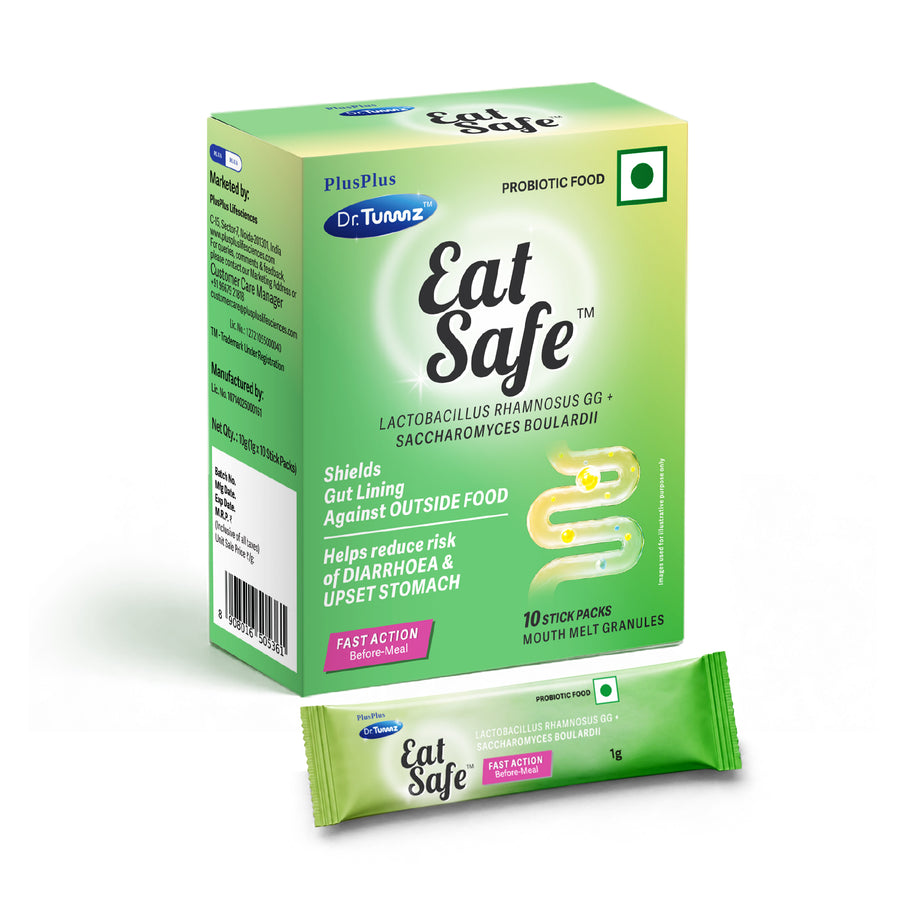
Eat Safe
When You Eat Out, Eat Safe.
Eat Safe is a dual-probiotic food formulated with 11 Billion live cultures from Lactobacillus rhamnosus GG (LRGG) and Saccharomyces boulardii. Formulated for outside food occasions and travel, it supports digestive health and helps reduce the risk of diarrhoea and stomach upset associated with outside food and water. LRGG supports the intestinal environment by interacting with the gut lining, while Saccharomyces boulardii supports gut defence by helping bind certain unwanted bacteria and toxins.
- Probiotics
-
Lactobacillus rhamnosus GG AVZ 6961 — 6 Billion CFU
Saccharomyces boulardii AVZ 4801 — 5 Billion CFU - Usage level
- Take 1 stick pack daily before meal, or as directed by a healthcare professional.
- Instructions
- The content of this stick pack can be consumed directly or can be mixed with water and consumed. Consume within 1 hour after opening.
- Net quantity
- 10 g (1 g × 10 stick packs). Probiotic food. Target group: adults.
- Flavour
- Vanilla. Allergen: none. Vegetarian.
Delivered within 2 to 4 days across India. Free delivery above ₹999. Not for medicinal use. Read the label before use.
When you eat out, eat safe.
Shields gut lining
against outside food.
Mouth-melt probiotic sticks with 11 Billion live cultures from two of the most clinically studied strains.
FAST ACTIONBefore-Meal
11 Billion CFU6 bn LGG + 5 bn S. boulardii
Mouth melt granulesNo water required
10 stick packs1 g each, 10 days
Before the mealFast action format
in one gram
6 Billion Lactobacillus rhamnosus GG and 5 Billion Saccharomyces boulardii, in a single stick pack.
No water required. No capsule to swallow.
One stick pack daily.
Allergen: none. Vanilla flavoured.
Shelf stable below 25°C. Fits a pocket, a clutch or a laptop bag.
Symptoms
Eat Safe shields your gut from harmful bacteria found in outside food and water
Food-borne infection produces a recognisable set of symptoms, usually beginning within one to three days of the meal.9 Eat Safe supports your gut before you eat outside, not after discomfort begins.
Eat Safe is not a treatment. Consult a doctor if you develop a stomach infection or food poisoning, and in particular if there is blood in the stool, a high fever, signs of dehydration, or symptoms lasting longer than two days.
The cause
What happens when you eat outside food
At home, you control the ingredients, the cooking process, the hygiene practices and the storage conditions. When you eat outside, those factors are beyond your control, and the food is exposed to harmful micro-organisms and the toxins they produce.1,9
The micro-organisms responsible
Why the Indian climate increases the risk
Most of these organisms multiply most rapidly between approximately 30°C and 45°C, a range that describes an ordinary Indian afternoon. Under such conditions, bacterial populations in food held outside refrigeration can double in roughly twenty minutes.1 A dish that was safe when it left the kitchen at noon may not be safe when it is served at three.
Monsoon humidity, groundwater contamination during the rains and interruptions to the cold chain between supplier and kitchen all add to this. The determining factors are therefore temperature and elapsed time, rather than the reputation of the establishment.
The scale of the problem in India
Food samples analysed across India in 2025–26 were found non-conforming. 40,023 of 2,23,808 tested.10
5.2 lakh inspections conducted, up from 4.01 lakh10 · 37% of milk and dairy samples failed standards11 · 1,147 food recalls ordered, up from 75412 · ₹109 crore in civil penalties, up from ₹35.7 crore12
Figures are drawn from Ministry of Health and Family Welfare replies to Parliament in 2026 and are provisional. The category of non-conforming samples includes unsafe and contaminated samples together with substandard, misbranded and mislabelled ones, and the published data does not separate these.
How Eat Safe works
How the dual-probiotic defence works
Harmful bacteria can cause illness when they attach to the intestinal lining and multiply there. Taken daily before a meal, Eat Safe delivers 11 Billion CFU of live cultures to the intestine, where they help form a protective coating across the lining and help intercept bacteria in the gut cavity before they reach it.5,6,7,8,13
Step 01
Scroll to travel
One strain works in the cavity. The other works on the lining.
Together they provide two layers of support through two different mechanisms, in a single stick pack taken before the meal.
S. boulardii (AVZ 4801)
Salmonella and E. coli attach to the intestinal wall by binding to mannose sugars on its surface. S. boulardii has a cell wall rich in the same sugars, and is designed to be bound in place of the lining.5,7,13
Because S. boulardii is a yeast and does not colonise the intestine, it passes through and is cleared, carrying bound bacteria with it.
It also secretes enzymes that help break down certain bacterial toxins and inactivate E. coli endotoxin.5,7
LGG (AVZ 6961)
LGG carries pili, fine hair-like structures on its surface, which adhere unusually strongly to the mucus layer covering the intestinal lining. This adhesion is the property for which the strain was originally selected.6,8,13
Once adhered, LGG occupies attachment sites and competes for the nutrients that arriving bacteria require, which helps limit their ability to colonise.
LGG also supports the mucus layer and the junctions between intestinal cells, which together form the barrier between the gut and the body.8
In the gut environment
Produces lactic acid and other metabolites which help make the surrounding environment less favourable to opportunistic bacteria.8
Binds opportunistic bacteria and their toxins to its cell surface, and secretes enzymes which help neutralise them within the gut cavity.5,7
At the intestinal lining
Competes with harmful bacteria for adhesion to the intestinal cells and for available nutrients, and supports mucin production.6,8
Supports the intestinal mucosa and helps preserve barrier integrity and brush-border enzyme activity.5,7
Supporting immunity and defence
Interacts with immune tissue in the intestinal wall and helps keep the local inflammatory response balanced.3,6
Supports production of secretory IgA, the antibody layer which coats the intestinal lining and helps trap bacteria before they reach the tissue.5,7
The three mechanisms above are adapted from published reviews of probiotic bacteria and yeast action in the gastrointestinal tract.3,5,7,8
The formulation
Two complementing probiotic cultures, clinically studied
The effects of a probiotic are specific to the culture rather than to the species, so a label stating only that a product contains probiotics conveys very little. Eat Safe declares both cultures, their identification codes and their individual counts on the carton.
per stick pack
Adheres to the mucus layer over the intestinal lining, occupying attachment sites and competing for the nutrients arriving bacteria need.6,8
A yeast rather than a bacterium. Binds enteropathogens in the gut cavity and is cleared, carrying them with it.5,7
Vanilla flavoured. Taken directly from the stick pack, or mixed with water.
Appropriate overages of probiotics are added to compensate probable loss on storage.
The published evidence
The dose
Why 11 Billion CFU matters
A probiotic’s effectiveness depends on delivering enough live micro-organisms, measured as colony-forming units, to reach the intestine. Many products carry lower counts than those used in published research. Eat Safe delivers clinically studied quantities of both cultures in a single stick pack: 6 Billion CFU of Lactobacillus rhamnosus GG and 5 Billion CFU of Saccharomyces boulardii.5,6
When to use it
Situations in which Eat Safe is recommended
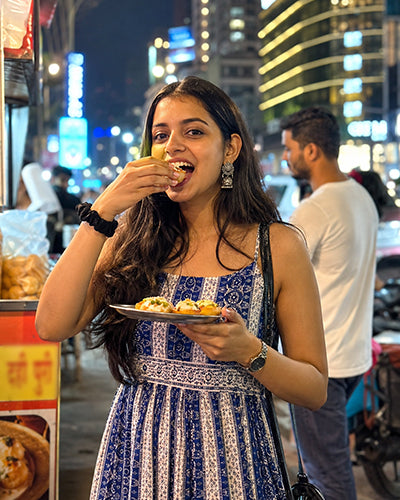
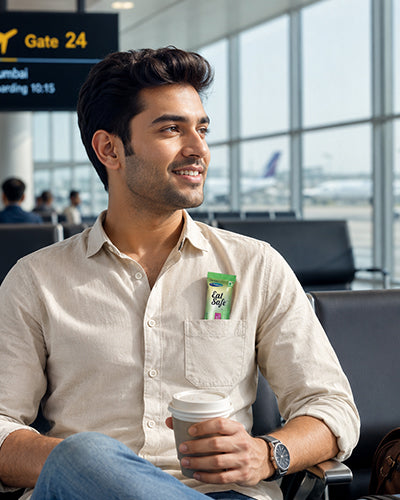
One stick pack is taken daily, before a meal, throughout any period during which meals are eaten outside the home.






Directions for use
How to take Eat Safe
Warning: If you are pregnant, nursing, under medical supervision, or have any allergies, consult a healthcare professional before consuming this product. Do not exceed the recommended daily usage. This product is not a substitute for a varied diet. Store out of reach of children. This product is not intended to diagnose, treat, cure or prevent any disease
Customer reviews
Why Eat Safe has become their essential
We spent ten days in Kerala with two children and ate everywhere from beach shacks to the hotel buffet. Nobody in the family was unwell. It is the first trip in some years that we have not had to find a chemist.
I travel for work for three weeks in the month and eat almost every meal outside. I keep a strip in my laptop bag. The fact that it does not need water is the reason I actually remember to take it.
I took it through the wedding season, across four functions with outside catering, and had no difficulty. I did miss a couple of days. Ten sticks in a box is slightly fewer than I would have liked.
I am a food blogger, so trying new cuisines is part of my work. Eat Safe helps me stay prepared for every food experience.
Work trips mean airport food, hotel breakfasts and late dinners. Eat Safe helps me feel more comfortable through all of it.
Ten sticks in a box is slightly fewer than I would have liked, but it lasted the wedding season without a problem.
Individual experience varies. Eat Safe supports the digestive system but does not guarantee that illness will not occur, and it does not replace normal food and water hygiene precautions.
Additional precautions
Beyond Eat Safe: smart choices when eating outside
Eat Safe is intended to be used in addition to the following precautions, which remain the foundation of food and water safety.1,2
- Choose hot foodVisible steam indicates recent cooking. Food held at a warm rather than hot temperature has permitted bacterial growth.
- Prefer freshly peeled fruit and vegetablesPre-cut fruit and salads are among the higher-risk items on any menu, as they are not heated at any stage.
- Be careful with iceFreezing does not destroy bacteria. Where the water supply is uncertain, take drinks without ice.
- Watch out for raw accompanimentsThese are prepared uncooked, often in the morning, and are frequently left at room temperature throughout service.
- Choose high-turnover placesRapid turnover generally means food is cooked to order rather than held, which reduces the time available for bacterial growth.
- Maintain hand hygiene before eatingHand hygiene before the meal is at least as important as after it. Carry an alcohol-based sanitiser where soap is unlikely to be available.
- Avoid reheated leftoversFood brought home and kept overnight has had a further extended period at ambient temperature.
- Carry ORSRehydration is the most important measure if illness occurs. Antibiotics taken without medical advice contribute to antimicrobial resistance and deplete normal gut flora.
Box of 10 mouth-melt sticks · ₹699
When you eat out, eat safe.
One box contains 10 stick packs of mouth melt granules, taken one stick pack daily before a meal.
Common questions
Frequently asked questions
What is Eat Safe?
Eat Safe is a probiotic food formulated with Lactobacillus rhamnosus GG and Saccharomyces boulardii, combining a probiotic bacterium and a probiotic yeast in a 1 g mouth-melt stick pack. It is taken as one stick pack daily, before a meal, and helps reduce the risk of diarrhoea and upset stomach from outside food.
Can I take Eat Safe during diarrhoea?
Eat Safe is formulated for support before eating outside food rather than as a treatment. If diarrhoea occurs, rehydration is the priority, and persistent or severe symptoms should be discussed with a healthcare professional. Seek medical attention for blood in the stool, high fever, signs of dehydration, or symptoms lasting more than two days.
Can I take Eat Safe with antibiotics?
Consult your healthcare professional before using Eat Safe alongside antibiotics. Note that Saccharomyces boulardii is a yeast and is therefore unaffected by antibacterial antibiotics, but it may be affected by antifungal medication, which should be mentioned to your doctor.
What should I do if I remember only after the meal?
Eat Safe may still be taken after eating, although the recommended usage level is one stick pack daily before a meal. If a day is missed, resume the following day. Do not exceed the recommended daily usage.
How does Eat Safe differ from a daily probiotic supplement?
Daily probiotic supplements are generally formulated for continuous maintenance of digestive health. Eat Safe is formulated for a specific occasion, namely a meal prepared outside the home. It contains two strains selected for that purpose, at counts declared to the end of shelf life, in a format that can be carried and taken without water.
May Eat Safe be taken every day?
Yes. The recommended usage level is one stick pack daily. Both cultures have an extended record of safe use. Do not exceed the recommended daily usage.
May children take Eat Safe?
Eat Safe is formulated for adults, and the target group declared on the pack is adults. Consult a paediatrician before giving Eat Safe to a child.
May Eat Safe be taken during pregnancy, while breastfeeding, or alongside medication?
Consult a doctor before use. This applies particularly if you are immunocompromised, have a central venous catheter, or have a serious underlying illness, as live cultures are not suitable for everyone. S. boulardii is a yeast and may be affected by antifungal medication, which should be mentioned to your doctor.
What does Eat Safe taste like?
The granules are vanilla flavoured and melt on the tongue within a few seconds. They may also be mixed with water and consumed. Eat Safe contains polyol sweeteners, which may have a laxative effect if the recommended daily usage is exceeded.
Does taking Eat Safe mean street food should be avoided?
No. Eat Safe is intended to be used in addition to normal food and water hygiene precautions rather than as a reason to abandon them, and it is formulated precisely for occasions on which conditions of preparation cannot be assessed.
References
- World Health Organization. Foodborne disease burden, global estimates.
- World Health Organization. Diarrhoeal disease fact sheet.
- World Gastroenterology Organisation. Global Guidelines: Probiotics and Prebiotics.
- ESPGHAN Working Group for Probiotics and Prebiotics. Recommendations for probiotic use in acute gastroenteritis in children.
- Saccharomyces boulardii AVZ 4801: clinical review and meta-analyses of randomised controlled trials.
- Lactobacillus rhamnosus GG AVZ 6961: systematic reviews across gastrointestinal indications.
- Kelesidis T, Pothoulakis C. Efficacy and safety of the probiotic Saccharomyces boulardii for gastrointestinal disorders. 2012.
- Mechanisms of adhesion and competitive exclusion by lactobacilli at the intestinal epithelium.
- Centers for Disease Control and Prevention. Foodborne pathogens and routes of transmission.
- Ministry of Health and Family Welfare, replies to unstarred questions, Lok Sabha, July 2026. Data for 2025–26 is provisional.
- Ministry of Fisheries, Animal Husbandry and Dairying, reply in Lok Sabha, 2026. Milk and dairy surveillance, 2025–26.
- Ministry of Health and Family Welfare, state-wise food safety enforcement data, Parliament, 2026.
- Mannose-mediated binding of enteropathogens to the S. boulardii cell wall; SpaCBA pili-mediated mucus adhesion in L. rhamnosus GG.